40001-95522
 sctk-yybgs@tkhealthcare.com40001-95522
sctk-yybgs@tkhealthcare.com
sctk-yybgs@tkhealthcare.com40001-95522
sctk-yybgs@tkhealthcare.com
WeChat Official
Internet Hospital

Online Shopping Mall

Sina Weibo
15 April 2026
"I can see you clearly from so far away, I'm so happy!" said Mrs. Chen, waving to the doctor from a distance as she came for her follow-up visit at the ophthalmology outpatient clinic.Mrs. Chen has been living with diabetes for over ten years. Poor blood sugar control has impacted her kidney function, and she now undergoes dialysis three times a week to manage her condition.One day, Mrs. Chen suddenly experienced a decline in vision in her right eye. With her husband's support, she visited the ophthalmology outpatient clinic. The examination results were shocking: her right eye's vision had plummeted to 0.06 due to vitreous hemorrhage. A B-ultrasound showed extensive retinal proliferation and traction in her right eye. Additionally, her left eye had only light perception in certain quadrants, with significant old hemorrhage and proliferation in the vitreous. Her eye condition was extremely severe.For Mrs. Chen, saving the vision in her right eye was imperative. However, due to long-term dialysis, she was thin and malnourished, with difficult blood glucose regulation and a poor overall physical condition. Whether she could tolerate eye surgery and maintain a face-down position as required post-operatively became issues we had to face.Facing multiple challenges in the treatment process, the Ophthalmology Department collaborated with the Nephrology Department to assess Mrs. Chen's condition and schedule her dialysis to ensure she could receive it normally during the surgical period. The Department of Anesthesiology was also involved early and monitored her throughout the surgery to ensure her vital signs were stable.
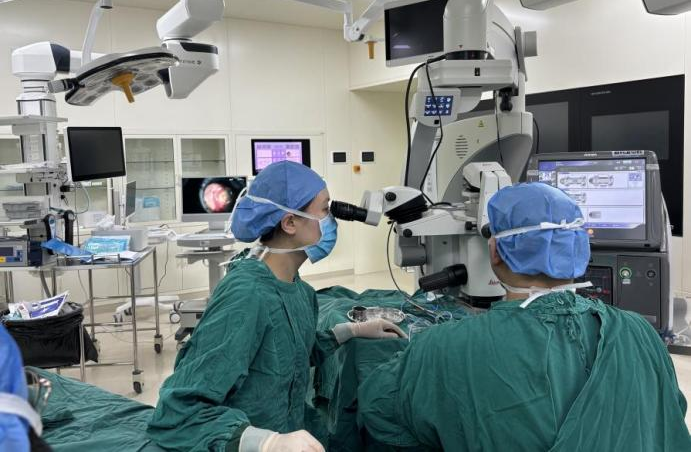
After comprehensive preoperative preparations, the department successfully performed phacoemulsification, vitrectomy, proliferative membrane peeling, panretinal laser photocoagulation, and intraocular lens implantation on Mrs. Chen's right eye. The surgery lasted two hours, which is twice as long as a typical combined vitrectomy and cataract procedure. Following the operation, she underwent intensive anti-inflammatory and anti-infection treatment. After several days of recovery, Mrs. Chen was discharged once her condition had stabilized.
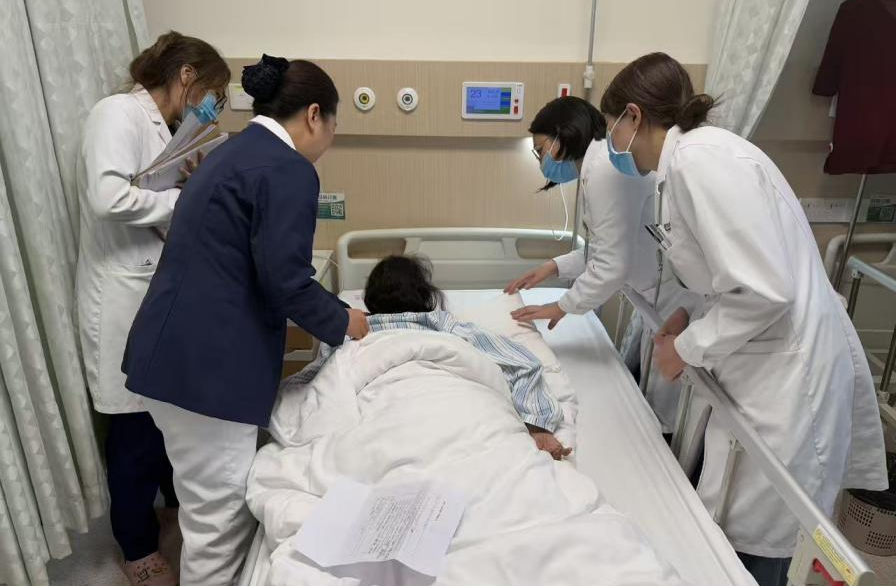
On November 20, Mrs. Chen returned for a follow-up visit at the ophthalmology outpatient clinic. During the examination, it was found that the vision in her right eye had improved to 0.25. Without her husband's assistance, Mrs. Chen was able to walk independently and complete the post-operative tests on her own. At that moment, we all felt grateful for this hard-earned recovery of her sight.
Although the post-operative recovery period has ended, the treatment is far from complete. We have outlined a three-month treatment plan along with regular follow-ups tailored to Mrs. Chen's condition, aiming to preserve her restored vision.
Knowledge link:Diabetic Retinopathy (DR) is a common microvascular complication of diabetes, with its occurrence closely tied to factors such as diabetes prevalence, disease duration, and blood glucose management. As the global diabetic population continues to rise, the number of individuals affected by Diabetic Retinopathy is projected to grow from 103 million in 2020 to 160 million by 2045. Diabetic Macular Edema (DME) and Proliferative Diabetic Retinopathy (PDR), which often occur alongside DR, are the primary contributors to vision loss, significantly affecting patients' quality of life.
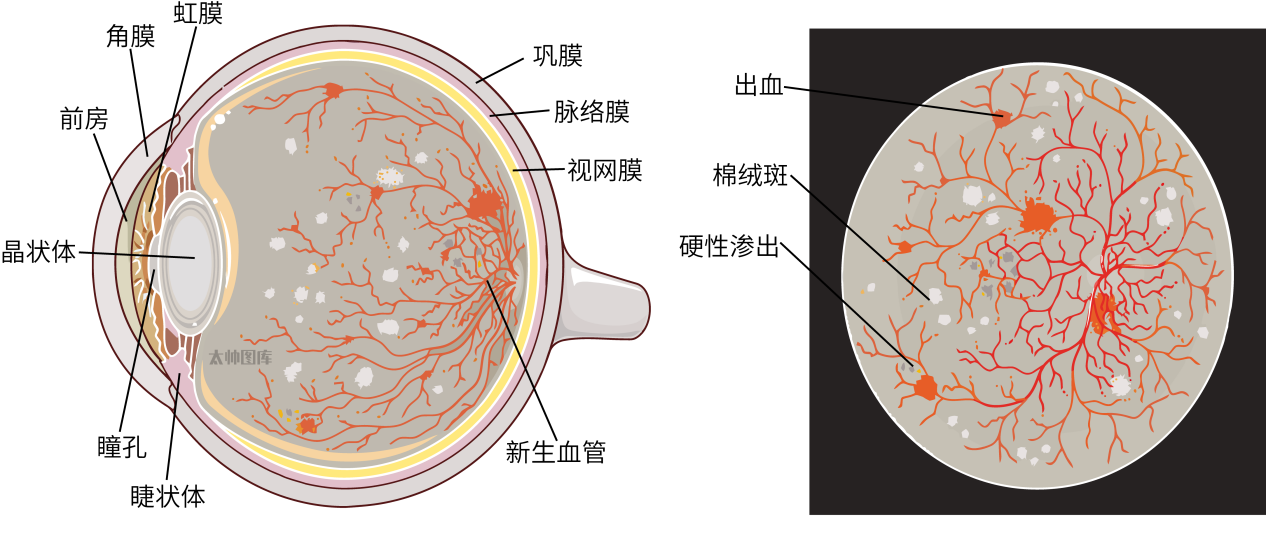
Diabetic RetinopathyImage source: Taisui Image LibraryScreening and early treatment of diabetic retinopathy are essential for preserving visual outcomes. For patients with type 2 diabetes, it is advised to undergo a comprehensive eye examination at the time of diagnosis. The frequency of follow-up visits is determined based on the condition of the fundus. For patients with coexisting diabetic nephropathy, microalbuminuria, or reduced glomerular filtration rate, follow-up intervals should be shortened, and a random fundus examination is recommended during periods of blood glucose fluctuation.
The ultra-widefield fundus camera enables patients to have fundus examinations without the need for pupil dilation. This allows for the detection of conditions like fundus hemorrhage, exudation, and microaneurysms, providing a preliminary assessment of the patient's condition.The Heidelberg retinal angiography device can perform Fluorescein Fundus Angiography to assess vascular leakage, ischemia, and neovascularization in the patient's fundus, which aids in the staging and treatment guidance of Diabetic Retinopathy;Optical Coherence Tomography (OCT) examination provides a direct view of macular edema. Multimodal combination examinations provide a comprehensive assessment of the condition and guide treatment, offering one-stop medical services for diabetic patients and ensuring that patients with fundus diseases receive timely diagnosis and treatment.
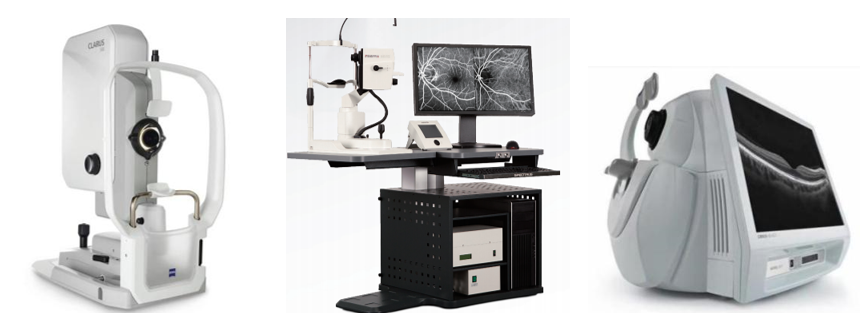
CLARUS500 Ultra-widefield Fundus Camera, Heidelberg SPECTRALIS-HRA Combined Retinal Angiography System, Zeiss Optical Coherence Tomography (OCT)
Introduction to the Ophthalmology Department:The Ophthalmology Department at Sichuan Taikang Hospital is part of the Chengdu Minimally Invasive Glaucoma and Cataract Surgery Specialist Alliance. The department is staffed by 9 physicians with intermediate or senior professional titles and 3 ophthalmic technicians. Additionally, there are 5 resident experts from Grade A Class III hospitals, and all physicians hold master's degrees. It has an outpatient department, an inpatient department, and a vision center, divided into 7 subspecialties: cataract, glaucoma, fundus diseases, pediatric ophthalmology, refractive surgery, Traditional Chinese Medicine Ophthalmology, and general ophthalmology.Currently, the services offered include micro-incision cataract phacoemulsification and intraocular lens implantation surgery (monofocal, continuous range of vision, multifocal, and toric intraocular lens), complex cataract surgery, minimally invasive vitreoretinal surgery, Minimally Invasive Glaucoma Surgery, ICL Implantation Surgery, minimally invasive endoscopic lacrimal duct surgery, minimally invasive strabismus correction surgery, anterior segment and retinal laser therapy, Intense Pulsed Light Therapy, herbal medicine atomization eye fumigation and meibomian gland expression therapy, fitting of regular glasses, myopia control glasses, orthokeratology lens, and defocus soft contact lenses, as well as amblyopia training and visual function training.
Doctor's Introduction:Liu Xiaoling, CPC Member, Attending Physician

Master's degree from Chengdu University of Traditional Chinese MedicineYouth Committee Member, Ophthalmology Committee of Sichuan Province Society of Traditional Chinese MedicineMember, Ophthalmology Committee of Sichuan Medical Women's AssociationMember, Leshan Committee of Integrated Traditional Chinese and Western Medicine OphthalmologySpecialties: Fundus diseases, Traditional Chinese Medicine Ophthalmology, and common ophthalmological diseases.
Graduated from Chengdu University of Traditional Chinese Medicine with a major in Integrated Traditional Chinese and Western Medicine Clinical Ophthalmology, under the guidance of Professor Xie Xuejun, a doctoral advisor at the university, she has nearly 10 years of experience working in the ophthalmology department of a public Grade A Class III hospital and excels in utilizing integrated traditional Chinese and Western medicine approaches to treat fundus diseases such as diabetic retinopathy, age-related macular degeneration, vitreous hemorrhage, retinal artery/vein occlusion, central serous chorioretinopathy, pathological myopic choroidal retinal degeneration, retinal periphlebitis, optic neuropathy, and uveitis. She is proficient in performing level 1 and level 2 ophthalmic surgeries, as well as some level 3 procedures. Her expertise includes retinal laser photocoagulation for diabetic retinopathy, retinal vein occlusion, retinal degeneration, tears, and various vascular diseases of the fundus. Additionally, she is skilled in using acupuncture to treat ophthalmic conditions related to nerve and muscle dysfunction. She is also skilled in diagnosing and treating a range of common eye conditions, including keratitis, conjunctivitis, styes, dry eye syndrome, eye strain, pterygium, trichiasis, glaucoma, and refractive errors.
Contributed by: Liu Xiaoling, Ophthalmology Department

Service Hotline:40001-95522-3
24Hour Consultation Hotline:028-66831111
24Hour Emergency Hotline:028-66831120

WeChat Official