40001-95522
 sctk-yybgs@tkhealthcare.com40001-95522
sctk-yybgs@tkhealthcare.com
sctk-yybgs@tkhealthcare.com40001-95522
sctk-yybgs@tkhealthcare.com
WeChat Official

Internet Hospital

Online Shopping Mall

Sina Weibo
15 April 2026
"Doc, I’ve been struggling with this urination problem for two years now. The meds aren’t working as well anymore. I’m really worried about traditional surgery because of the bleeding and how it might affect my sexual function. What do you think I should do?" asked the 57-year-old patient, who’s been dealing with benign prostatic hyperplasia for two years.
Over the past two years, he visited multiple hospitals. Frequent urination, urgency, and dysuria became part of his daily life, significantly impacting his quality of life. Initially, oral medication could barely control the symptoms. However, as the condition progressed, the medication's effectiveness diminished, and the dysuria worsened.
The patient was informed that the traditional treatment for benign prostatic hyperplasia is Transurethral Plasma Kinetic Resection of the Prostate. Although it is a minimally invasive surgery, the procedure is lengthy and poses a high risk of bleeding both during and after the operation. What concerned him even more was that this type of surgery could lead to complications such as retrograde ejaculation, which could affect his sexual function. For a patient who prioritizes quality of life, this was undeniably unacceptable.
Just when the patient was at a loss, he heard about Transurethral Thermal Vapor Ablation of the Prostate, which rekindled his hope for treatment.
Unlike traditional surgery, Transurethral Thermal Vapor Ablation of the Prostate is considered an "ultra-minimally invasive" procedure. The entire procedure takes only about ten minutes. A specialized instrument is inserted through the urethra to reach the prostate area, where steam at 103°C is used to precisely ablate the hyperplastic prostate tissue, relieving urethral compression at its source.
What further reassured the patient was the exceptional safety of this surgery, characterized by minimal hemorrhage during the procedure and a rapid recovery afterward.
In comparison to traditional electrosurgical procedures, its greatest advantage is the superior preservation of the patient's sexual function, effectively avoiding embarrassing complications like retrograde ejaculation.
Willing to give it a try, the patient visited the Department of Urology at our hospital for a consultation. After conducting the necessary examinations, the doctor determined that his physical condition met the criteria for surgery and successfully performed Transurethral Thermal Vapor Ablation of the Prostate.
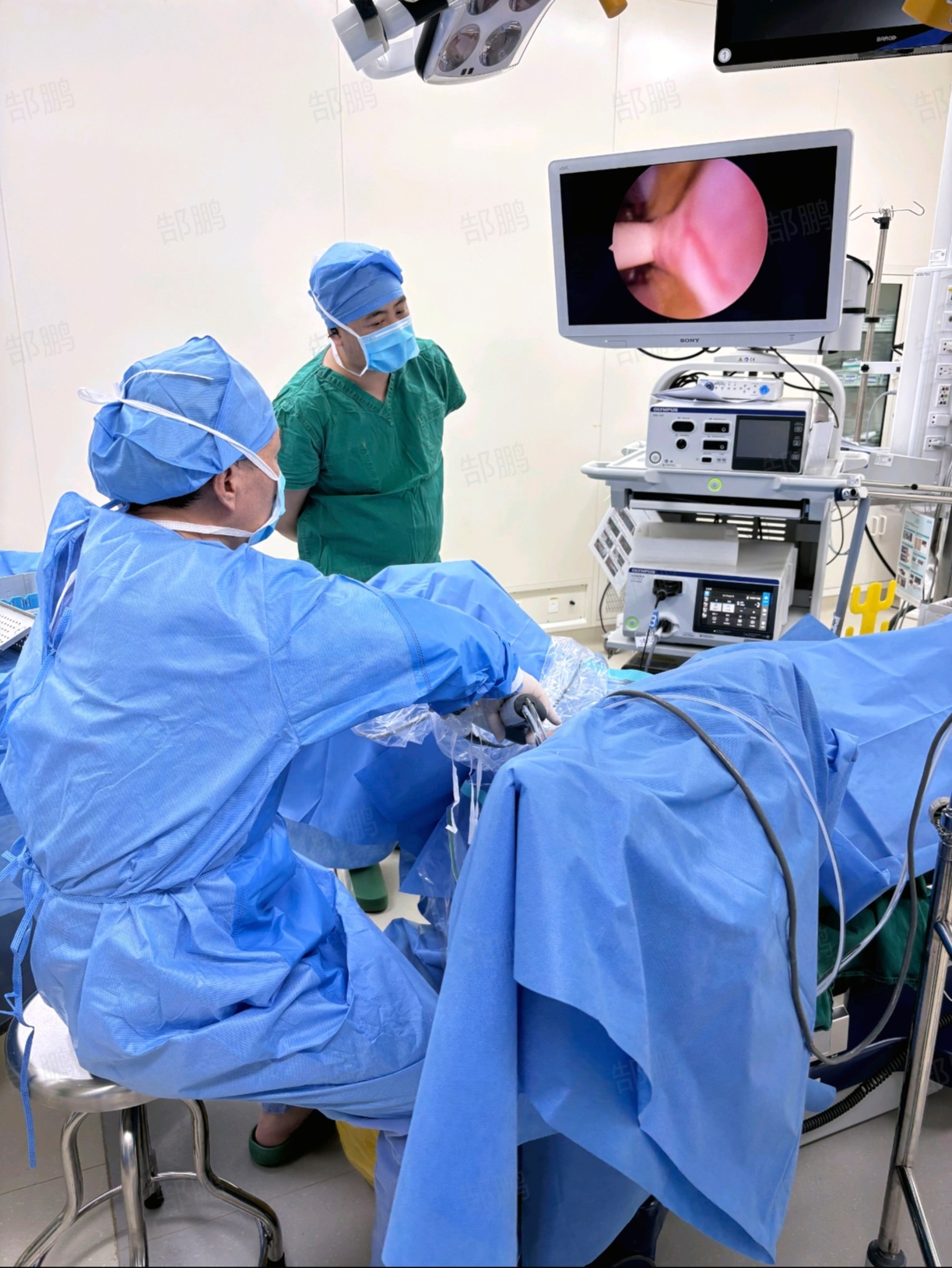
Image source: Intraoperative photograph
After the surgery, Mr. Zhang experienced significant improvement in his dysuria symptoms, and the issue of difficult urination was completely resolved. To his delight, he fully retained his sexual function.
After getting better, the patient kept saying, "I never thought such a small surgery could fix my big problem and keep my sexual function. Huge thanks to the doctors at Sichuan Taikang Hospital!"
Health Education Corner
Benign prostatic hyperplasia is a common condition among middle-aged and elderly men, and its incidence rises with age.
If you experience symptoms like frequent urination, urgency, and dysuria, you should seek medical attention promptly.
Transurethral Thermal Vapor Ablation of the Prostate provides a minimally invasive, safer, and quality-of-life-focused treatment option for patients with benign prostatic hyperplasia, particularly for those who wish to preserve their sexual function.
Facts About Transurethral Thermal Vapor Ablation of the Prostate
In simple terms, it’s akin to providing the enlarged prostate with a "precision slimming" treatment using "steam."
The doctor will use a small instrument to insert a therapeutic needle, just a few centimeters long, into the urethra to accurately target the hyperplastic prostate tissue. Then, the needle tip will emit pure water vapor at approximately 103°C. High-temperature water vapor molecules will instantly "deactivate" the excess hyperplastic cells, leaving the surrounding normal tissue unharmed. The surgery can be completed in as little as 5 minutes.
The ablated hyperplastic tissue will be naturally metabolized and absorbed by the body over the following weeks, similar to how it processes "waste." As a result, the compressed urethra widens again, allowing urination to become smooth naturally!
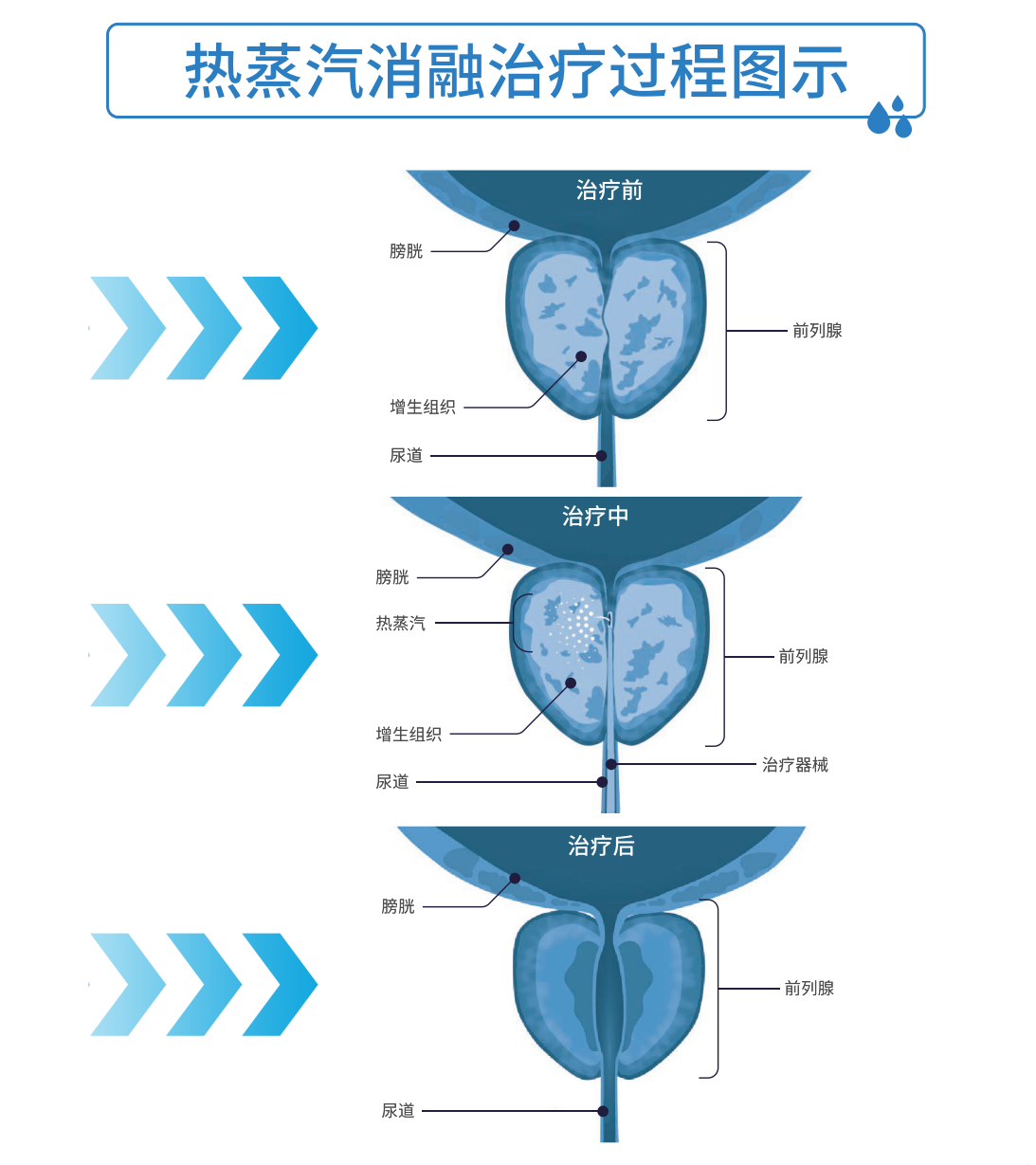
Image source: Provided by the supplier.
Compared to traditional surgery, the advantages of water vapor ablation therapy are highly notable and can be summarized as "minimally invasive, minimally painful, minimally bleeding, and preservation."
1. Minimally invasive: The treatment is conducted solely through the natural channel of the urethra, eliminating the need for surgery and leaving no incisions on the body surface.
2. Minimally painful: The treatment process is comfortable and causes minimal bleeding.
3. Fast recovery: The treatment duration is short, taking as little as approximately 5 minutes.
4. Function-preserving: This is one of its most significant advantages! Thanks to its precise targeting, it can optimally protect male sexual function and urinary control, avoiding the risks associated with traditional surgery and eliminating any future concerns about the treatment.
If you or your relatives and friends are experiencing issues with benign prostatic hyperplasia, it is advisable to seek medical advice early to learn about this ultra-minimally invasive technology and regain smooth urination and a high quality of life! We specialize in safeguarding men's health!
Contributed by Gao Peng, Department of Urology

Service Hotline:40001-95522-3
24Hour Consultation Hotline:028-66831111
24Hour Emergency Hotline:028-66831120

WeChat Official